 VERTICE
In Everyone's Life, a Little Rain Must Fall: What to Do (and Not Do) When Water Hits Your Elevator Cab
There are plenty of instructions out there for what a building should do when water affects its elevators. Here's the short version.
Rule #1: do not use the elevator.
- Shut down the main line switch, with guidance from the elevator company.
- Make sure the doors are closed.
- Post an "OUT OF ORDER" sign.
- Get the elevator company on site fast to assess the damage and, more importantly, get the car back in service.
Every elevator company knows the priority is returning to service as quickly as possible. Equally important is the report: what was done, what needs to be done soon, and what will be needed in the near future. That report is your record, and it is the basis for your insurance claim.
What often gets missed: the cab
Yesterday I looked at a commercial building where a water leak from an upper floor hit an entire bank of 6 elevators. A quick call to the mechanics on site and a subway ride later, I was on an upper floor. All but two cars were still out of service while boards were replaced and wiring dried out.
The clean-up is where it gets interesting. Teams typically dry and wipe down the cab interior and the top of car. That speeds the return to service, keeps the work environment safe, and prevents further moisture problems while repairing. Fair enough, and kudos on the rapid response. But when I got on the cars to see where the water was and where it went, I found issues that would have gone unnoticed had I not been there.
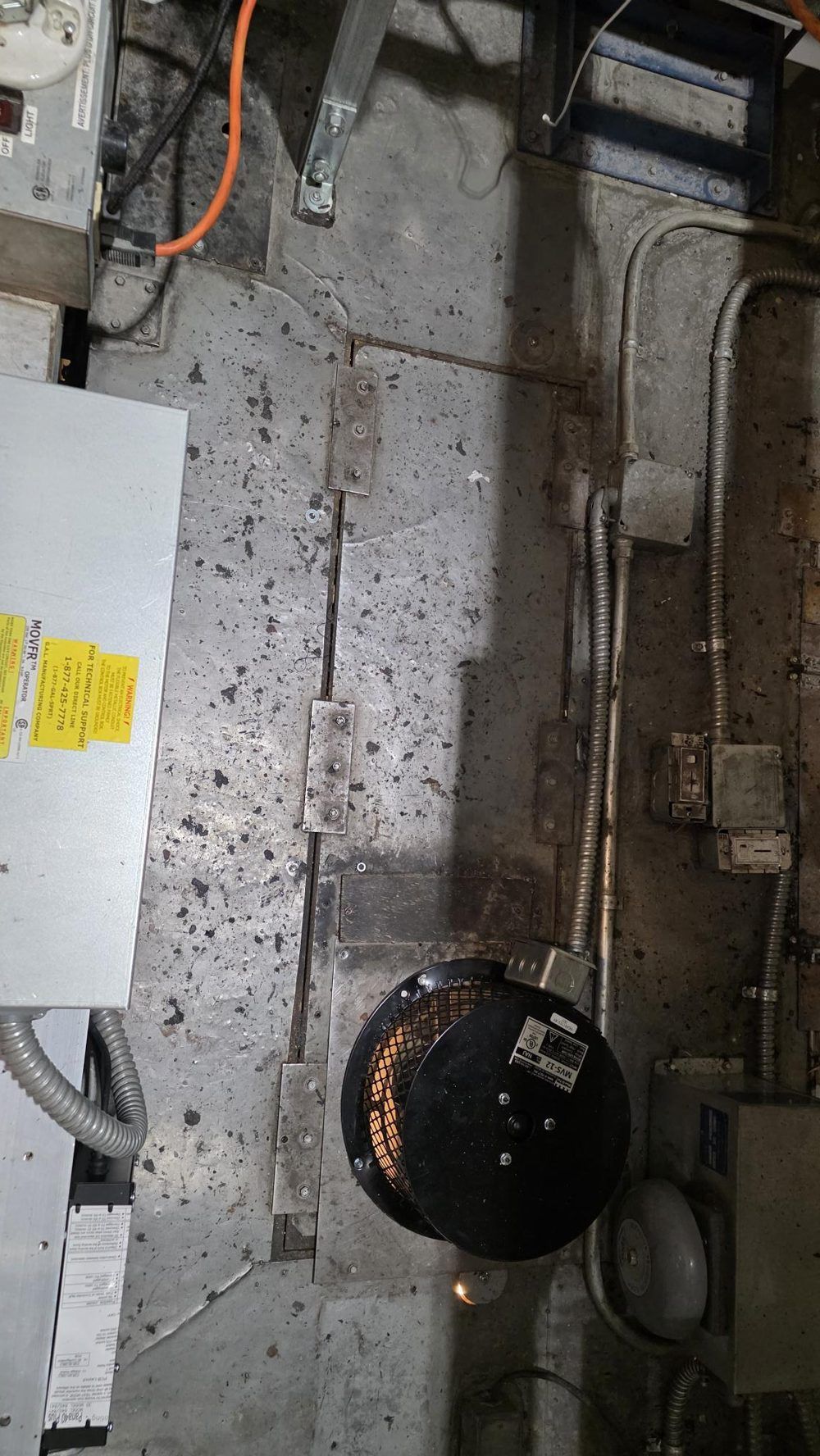
1. Water on top doesn't stay on top. The cars that did not get a full top-of-car clean down showed water pooling from the front of the car to the back, in both markings and clumps of coagulated dust. It sat on top of and around the fan opening, an access panel and around the top exit. Substantial water collected on the car shell, and it leaked into the cab interior through those openings.
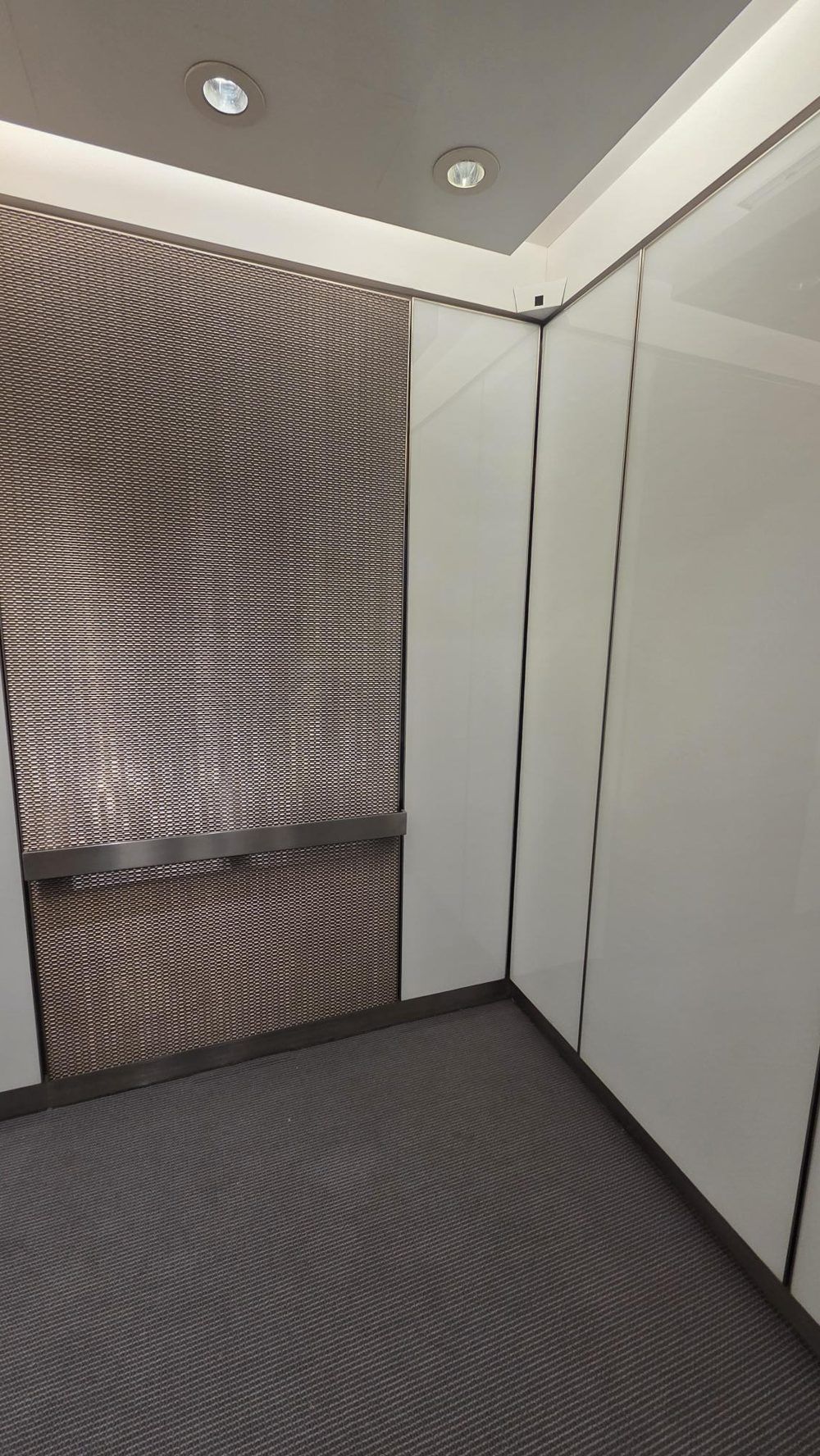
2. Wood substrates hold moisture. The interior had wood-backed wall panels with stainless steel wire mesh and laminated glass, and a wood-backed drop ceiling with perimeter LED cove lighting and LED downlights. Replacement is highly recommended. Deep moisture in a wood substrate dries slowly, and as it does it causes warping, eventual failure of the hanging systems, and electrical failure of the lighting down the road.
3. The enclosure itself was plywood. What wound up being the biggest miss, the car enclosure was not steel. It was plywood, with exposed edges throughout the canopy, the exit hatch and the sides of the enclosure. The swing return back boxes were also built of exposed plywood, which explains the mechanics' frustration at not being able to close the swing returns after replacing boards.
The outcome
I took multiple photos, wrote up all visible water damage and existing conditions, and recommended complete new cabs and finishes.
Based on an estimate for the cabs and a rough idea for the elevator contractor's labor to remove and replace the enclosures, the claim on this event could possibly be nearly $1 million. If this had been missed, the building would have lost that coverage. It would also have put cars back in service that were virtually guaranteed to fail later, with the possibility of falling ceilings, dislodged glass or mesh panels, and structural failure of the shell.
The opposite story
For comparison to the importance of reviewing a water damage project properly, within the past year I visited a site with water damage where a vendor was quoting complete cab replacement. After review, only the ceiling and lighting needed replacing. An expert protects you from under-claiming, and from over-spending.
Where Vertice comes in
Not every elevator professional is a cab expert, and they don't need to be. That's what our Claim Appraisal services are for. We can advise quickly on what to do, what not to do and what to look for at the time of the incident. We can dispatch to document that the cab is unaffected, or identify work that needs attention immediately or in the near future. Most importantly, we make sure costs are not left unmitigated by the insurance claim that gets filed.
You wouldn't settle an auto accident claim without an expert looking at the car. Do the same for something as important as an elevator.
Contact us at Nick@VerticeECC.com for Claim Appraisal services.
Mind the cab.
Planning cab interior work?
Talk to us before the first panel goes up. The first consultation is complimentary.
Book a Free Consultation Call 917-963-6063