 VERTICE
What You Don't Get
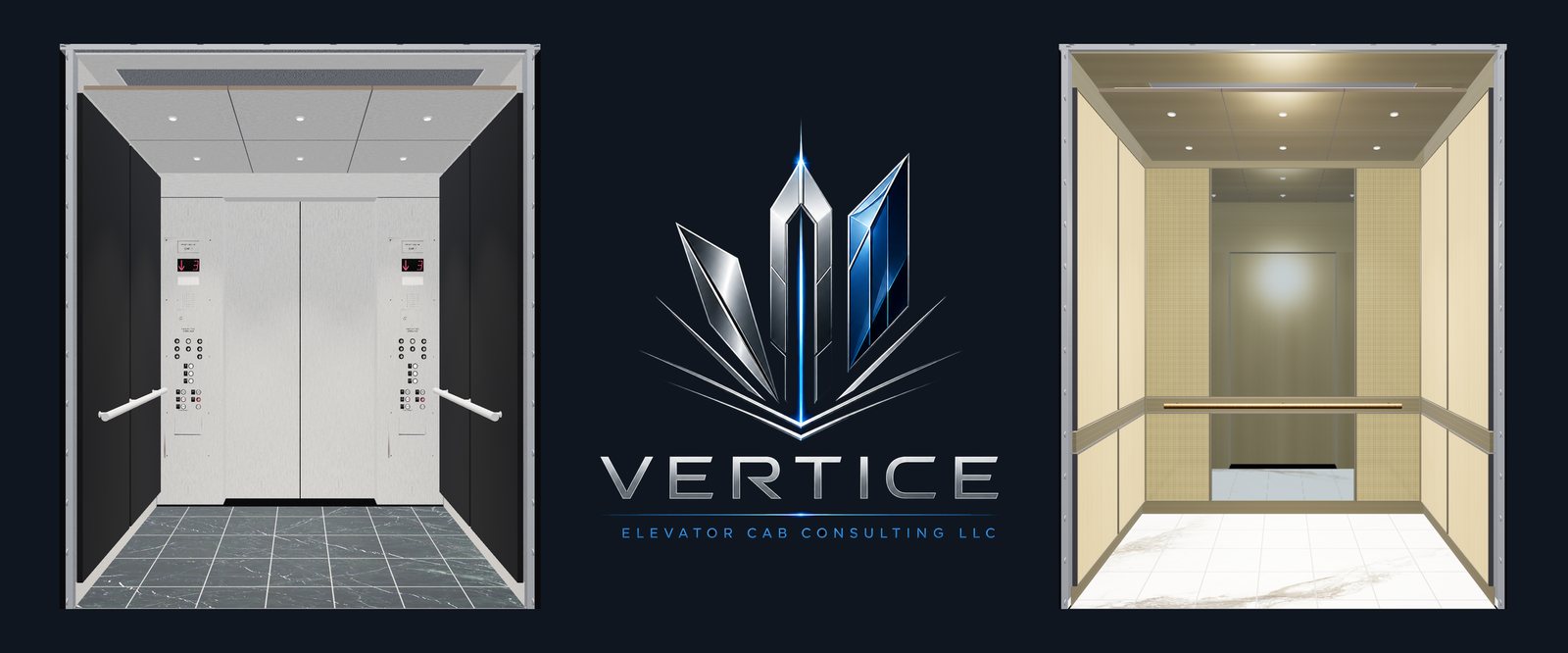
Almost every call I get from an owner, a developer or a project manager opens with the same question. What does hiring a cab consultant get me. It's a fair question and I have a clean answer for it, but it has always struck me as the wrong question to be asking. The cab is getting designed either way. It is getting bought, built, shipped and installed either way. The only real question is whether you are getting what you wanted, and who is making sure of it. So the more useful question, and the one that shows up on your schedule and in your budget, is what you end up with when there is nobody advocating for you.
I am not going to retell the dramatic ones here. I have already written about the ceiling panels a contractor stuck to a canopy with magnets, which let go during the required safety and buffer tests and then kept letting go in normal service over passengers' heads. I have already written about the ceiling exit drawn where it looked balanced on the reflected ceiling plan instead of where the existing conditions and the code actually need it to be. Or the hotel with multiple broken glass panels, placed exactly where the carts hit them all day. Those are the stories people remember, but they are not the ones that take the most money and time out of this industry. The ordinary problems cost far more. They happen on well run projects with competent people, and they never produce a single moment that anyone would point to and call a failure.
It starts with waiting. Design development on a cab interior does not stall because somebody is lazy. It stalls because the questions have nowhere to go for an answer. The architect owns the drawing and is designing a beautiful vision, which is exactly what they were hired to do. The elevator contractor owns the equipment, and in their contract the interior is usually just an allowance and a line item they would rather not spend meetings on. The general contractor owns the schedule and reads the cab as a small number attached to a separate trade, and by now schedule is the only thing they are looking at. The cab shop owns the box and does not enter the conversation at all until somebody sends a drawing over to be priced. That is a recipe for your most coveted meal being prepared with no chef at all.
So the questions go out as emails. Can this material be used. Is it in budget. Is it fire rated. How do the existing conditions affect the design intent. How long will it take to produce. What happens to the handrail at the front wall that swings open. And a myriad of others behind those. What are the cost and the sustainability differences between real stone and a porcelain slab, and can either one live on the wall of a moving car in this building. What is all of it going to weigh against the rated load. Do the openings align now, will they align after, and do the designed features project into the opening. While those emails float from person to person looking for the right answer, looking for guidance, the project schedule keeps moving, the mechanical equipment keeps moving, the clock to your CO keeps running. That is where your first month or two goes. Not to a problem. To an absence.
The months after that go to the education nobody budgeted for. An architect who has never manufactured a cab is now learning, in real time and on your clock, that a cab interior is not a room. It is the inside of a machine that has to survive a full speed safety application without shedding parts, and everything attached in there has to be secured so it will not loosen or become displaced in ordinary service, on safety application or on buffer engagement. That is ASME A17.1 2.14.1.2.3, and it governs the ceiling, the lighting, the panels, the handrails and every decorative element in the car. Materials need a fire rating in an elevator. Existing conditions do not follow design intent. Certain materials behave very differently inside a working elevator than they do anywhere else in a building. Nobody on the team is contemplating any of that during design development. They find out later, when the schedule is already late and the budget is already set, and by then the design is emotionally approved.
Somewhere in that stretch you will hear the words we cannot do that. Sometimes it is true. Sometimes it is true only of the shop saying it. There are really three different answers hiding inside that one sentence. The detail is not permitted by code. The detail is buildable, but not by that particular fabricator with that particular equipment. Or the detail is entirely buildable by anyone, and the person answering has simply never done it and does not want to learn on your job. Those three deserve completely different responses from you, and without somebody on your side of the table who has built cabs, you have no way to tell them apart. So you take the no. You take it politely, you take it early, and you never find out that the reveal you wanted, the radius corner, the detail you had your heart set on, was available the whole time from a different shop or by an alternate method.
That is how you end up settling for what is being sold to you. Not because you chose it. Because it was the easiest thing for the person in front of you to deliver, and easy is very persuasive when it arrives with a lower number or a schedule promise attached. Every cab shop has a package they like to build. It is efficient for them, their sheet sizes work out, their guys have done it a hundred times, and it is genuinely a fine cab. The problem is that it is their cab, not yours, and once it is in front of you as the practical option, the conversation quietly changes from what does this building need to what will this building settle for. You should notice that every value engineering suggestion moves in exactly one direction, and it is never toward you.
By the time the design is finally settled, the clock is the one making the decisions. Elevator equipment gets ordered at award, which starts the promised project schedule, and the cab interior is somehow always the last thing decided and one of the first things needed. So the biggest visual decision in the building, the one every tenant, every buyer and every visitor will stand inside for ninety seconds at a time for the next thirty years, gets made in a twenty minute call because the final decision has to happen by end of day Friday. Nobody in that call is being careless. They are being squeezed. But that is where the details die. The ceiling gets simplified. The feature wall becomes a field of the same panel as everything else. The handrail becomes whatever is in stock. And the reason is never that anyone decided the cheaper version was better. It is that there was no time left to think, because the thinking that should have happened months earlier never had anybody to do it.
Then there is the shape of the chain itself, and this is the part that costs real money without ever appearing as a line item. Look at how the cab reaches your building. Architect or general contractor to elevator contractor to cab vendor to sub supplier. Multiple sets of hands before anything is fabricated. Every one of those handoffs adds markup, adds approval time, and adds one more place for information to fall through. The people who actually build your cab are far too many steps away from the person paying for it, and they answer to the layer directly above them, not to you. Ask a shop foreman a question and the answer travels back up through every one of those layers, changing slightly at each stop, arriving as a schedule note two weeks later. This is why submittal cycles run three and four rounds as a matter of routine. It is not incompetence. It is that no single party is accountable for closing them, so nobody does.
Now add what happens when the cab was never designed for the way the building actually uses it. This is the quiet one, and it does not surface until you are occupied. A residential building takes move ins, and if nobody specified pad hooks and protective pads, the first tenant with a sofa teaches everyone what a bare finish wall costs. A medical building takes gurneys and carts, and beautiful glass or any easily damaged material becomes a maintenance line item forever. A hotel takes bell carts and luggage. Mirror polished stainless looks extraordinary in a photograph and shows every fingerprint in a lobby running hundreds of trips a day. Glass looks magnificent and comes with its own code obligations for how it is laminated and mounted in a car enclosure, under A17.1 2.14.1.8, along with the very practical question of what happens the first time a hand truck hits it. Lighting gets chosen for mood and then has to hold the required illumination at the threshold and at the car floor. Finish weight gets added and added, and at some point that added dead load has to be reconciled against the rated load and the equipment underneath it. The metals chosen will either carry intensive and frequent maintenance for the life of the building, or they cannot be maintained at all and can only be replaced once they are scratched. Sometimes the material cannot be duplicated or even obtained years later when a replacement panel is needed. That is a lot of problems to live with, and a lot of future pain to inherit, because everything was chosen in haste, without guidance, without the real world experience that would have helped you decide. This is the aftermath of you get what you pay for. It is the more expensive and more frustrating version of it, where you now pay for what you got.
And then there is the one I think does the most damage of all. On most projects you do not get to see what you designed until it exists. You approve a cab off finish chips, a spec sheet, an elevation and a standard rendering somebody produced to sell a look. Then you wait. The first honest look at your cab is when the first car is completed and cleaned. That is the worst possible moment to discover that the proportions are wrong, that the panel joints are not where you thought they would be, that the material reads far busier at full scale than it did on a four inch sample, or that the whole design simply does not feel the way you imagined it. Because at that point nothing is a redline anymore. Every change is a change order, a refabrication, a reinspection and a schedule slip, on the one trade that gates your certificate of occupancy. No elevator sign off, no CO. No CO, no tenants and no revenue, with the construction loan accruing the whole time. I have watched buildings spend more on one month of that than the entire cab package cost.
All of this shows up in bidding too, before a single part is cut. When a cab package goes out with open RFIs and unresolved details still in it, contractors are not fooled. The good shops price the uncertainty. They add allowances, they add exclusions, they write to be determined next to the interesting parts, or they look at the mess and simply decline to bid. So you get fewer numbers, higher numbers, or a low number that is low precisely because it excludes everything you actually wanted. Then the difference resurfaces at buyout, or worse, as change orders after award, and everyone wonders why the cab went over. It went over in the drawing set, months earlier, in the questions nobody was there to answer.
So here is the close, and I am doing it backwards on purpose. I am not going to list what you get from us. I am going to list what you do not get, because almost all of it is what you would have gotten without us.
You do not get a subcontractor. We do not fabricate the cab and we do not sell it to you, so there is no version of this where our advice quietly serves our own shop.
You do not get markup on the cab. We carry none. Nothing about that price benefits us, which is the only condition under which leveling three bids on identical scope means anything at all.
You do not get a salesman deciding what is possible. You get an answer about whether a detail is a code problem, a material problem now or years from now, or a design that will not hold up, and you get it while the design can still change.
You do not get the package that was easy for somebody else to build, or the one they wanted to sell.
You do not get a rendering that cannot be built. What you approve is dimensionally true to the actual car, with the weight calculated, the specification written and the code checked as you design it, not after.
You do not get to meet your own cab for the first time when the doors open.
You do not get an interior that belongs to nobody, with questions circling for months because there is no natural place for them to land.
You do not get a design that fails on weight, on platform area, on ADA or on an attachment method that was never going to survive a buffer test.
And on the item that actually costs you, you do not get a cab driven delay to your project schedule or your CO.
The cab interior is one of the smallest line items on your project and one of the largest concentrations of schedule risk on it. That asymmetry is the entire argument. So the question was never what hiring us gets you. The question is what the last four projects cost you without it, and whether you would like to run the next one differently.
Planning cab interior work?
Talk to us before the first panel goes up. The first consultation is complimentary.
Book a Free Consultation Call 917-963-6063