 VERTICE
Cheap Is Expensive
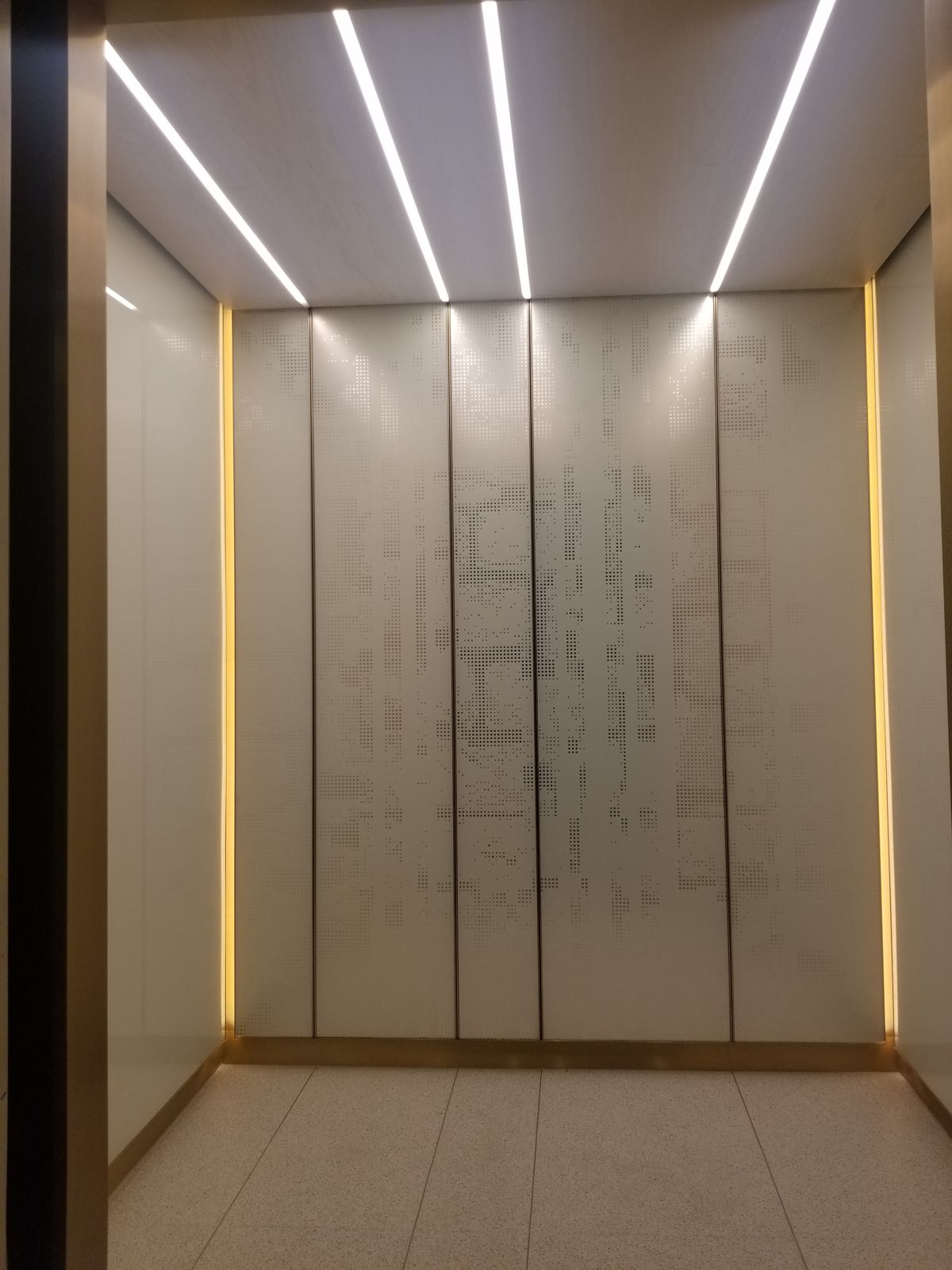
A few months back I got a call from an elevator maintenance contractor to meet with the property manager of a very large Class A commercial office tower. The kind of building where the lobby alone tells you what the rents are. Marble, glass, and multiple banks of high speed elevators moving thousands of people a day. The complaint sounded simple enough on the phone. They were having a ceiling and lighting issue in the elevator cabs and wanted someone qualified to take a look.
I have been around elevator cabs long enough to know that a simple ceiling issue is almost never simple, so I went in expecting to find something interesting. What I found was a textbook example of why I tell every client the same thing. Cheap is expensive.
Here is what happened. During a recent cab interior renovation, a contractor was hired to install perimeter LED light panels around a new drop ceiling in each car to complement a clean and sleek commercial glass elevator design. Nice look, clean light, very current. But somewhere along the way a decision was made to save money on the installation. Instead of mechanically fastening those panels to the canopy structure or the drop ceiling, the contractor mounted them with magnets. No screws, no brackets, no safety wires. Just magnets holding lighting components overhead in cars that travel in excess of 1000 feet per minute.
If you know how elevators are tested and certified, you already know where this story is going. These cars had to go through their required testing, including full speed safety and buffer engagement tests. Think about what that means physically. A car traveling over 1000 feet per minute is brought to a hard stop by its safeties, or landed on the buffers in the pit. Everything in that cab experiences a sudden and violent load. During those tests, LED panels released from the ceilings and dropped from position, swinging dangerously in the cab attached only by the thin wires connected for power. Magnets do not care how good the ceiling looks. They hold until they do not.
That should have been the end of it right there. Fail the components, redesign the attachment, move on. Instead the panels were stuck back up and the cars went into service. And then the building learned the second lesson about magnets. They fatigue. Between the constant vibration of normal runs, the small movements of the cab structure, door operation, and the daily abuse every commercial elevator absorbs, the holding force degraded. Panels began letting go intermittently during ordinary service. Not during a test with technicians in the car. During normal use, with tenants and visitors standing underneath them.
Stop and sit with that for a second. A rigid panel falling seven or eight feet onto a passenger in a sealed steel box, swinging violently banging into the wall panels and possibly the people inside. Best case it startles someone and the building gets an angry email. Worst case it strikes someone in the head or face and the building gets a lawsuit, and that lawsuit writes itself. ASME A17.1 is direct on this point. Section 2.14.1.2.3 requires that enclosure linings, decorative panels, light fixtures, suspended ceilings, and other equipment attached within the car enclosure be securely fastened and supported so that they will not loosen or become displaced in ordinary service, on safety application, or on buffer engagement. The lighting provisions go further and require fixtures to be mounted so they withstand the required elevator tests without being damaged or becoming dislodged. A plaintiff attorney does not need to be an elevator expert to read that paragraph to a jury. The components fell during the very tests the code says they must survive, and the building put them back into service anyway. There is no defense for that. There is only a settlement amount.
So what was my recommendation after the survey? Not new magnets. Not adhesive. Not safety cables zip tied to a system that was never engineered to be there in the first place. My recommendation was to remove the entire ceiling and lighting system from every car and start over. Design a new ceiling with new lighting that maintains the required light levels at the threshold and the car floor, with every component mechanically secured to the canopy and engineered to take a safety application without shedding parts. Yes, that means the building is paying for cab ceilings twice. The first installation, the cheap one, bought them nothing but risk and is now headed for a dumpster.
Add it all up. The original installation cost. The service calls every time a panel came down. The remediation survey. Full demolition of the existing ceilings. New engineered ceilings and lighting across multiple banks of high speed cars. Downtime on elevators that this building absolutely depends on — again. And hanging over all of it, months of exposure where any single falling panel could have produced an injury claim that would dwarf every other number on this list. The savings from skipping proper fasteners was probably a few thousand dollars per car. The cure will cost many multiples of that, and that is the good outcome, the one where nobody got hurt first.
Here is the part that stings the most. All of it was avoidable for the cost of a few hours of consulting. An elevator cab consultant reviewing the design before installation would have rejected magnetic attachment in the first conversation. We know what 2.14.1.2.3 requires. We know what a safety application does to a cab interior. We know which attachment methods pass testing and survive twenty years of service, because we have watched what happens to the ones that do not. We would have specified proper mechanical fastening, confirmed the light levels, coordinated with the elevator contractor on weight and code compliance, and the building would have paid for its ceilings exactly once. And, as a second sting, the drawings and idea from the cab manufacturer — signed off by someone absolving them of any responsibility in simply stating "this is what was designed and the owner signed off."
General contractors and even good interior contractors build beautiful things, but an elevator cab is not a room. It is a moving machine governed by a safety code, and everything inside it has to be designed for forces that never exist in a lobby or an office suite. When someone bids your cab interior work noticeably cheaper than everyone else, ask exactly how they plan to attach every component overhead, and ask who is verifying it against A17.1 before the inspector or gravity does it for you.
Cheap is expensive. In elevators, cheap can also be dangerous, and dangerous is the most expensive thing there is. If you are planning cab interior work, bring in a cab consultant before the first panel goes up. It is the least expensive decision you will make on the entire project.
Planning cab interior work?
Talk to us before the first panel goes up. The first consultation is complimentary.
Book a Free Consultation Call 917-963-6063