 VERTICE
A Rendering You Can Actually Build
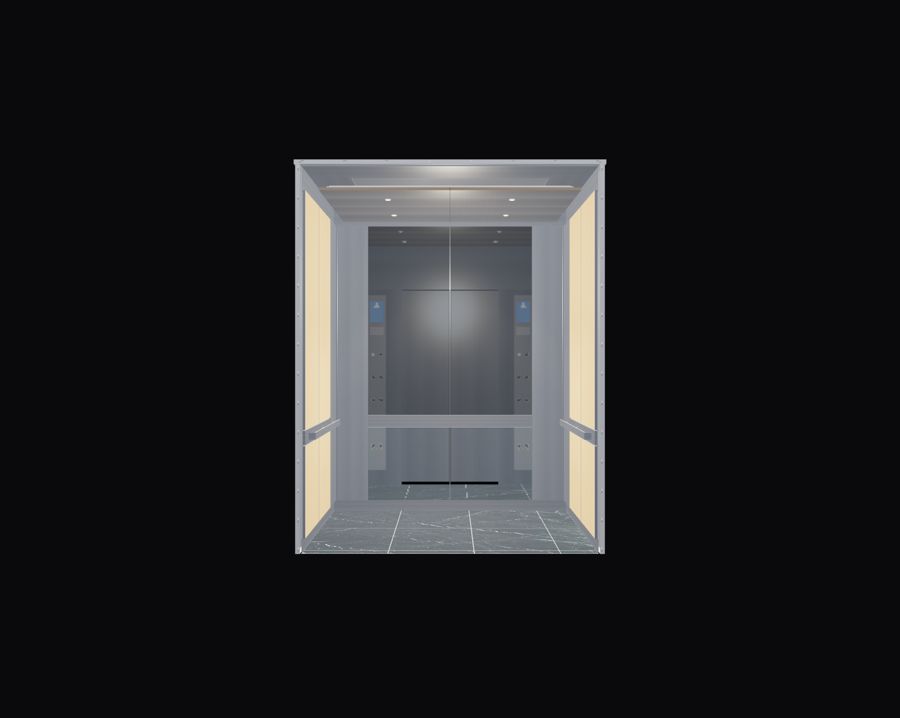
Every field note I have written in this series comes back to the same idea. The cheapest place to find a problem is on a drawing, and almost none of the expensive ones survive contact with a pretty rendering. I have spent these entries describing the misses that hide inside a beautiful picture, the exit that does not line up, the glass that cannot take a bell cart, the ceiling that was never buildable as drawn. So this one is different. This one is about the tool we built at Vertice specifically so those misses have nowhere left to hide. It is our rendering program, and the whole point of it is that it does not hand you a pretty picture. It hands you a cab you can actually build, priced, weighed, specified, and vetted against the real car, before a single part is cut.
Start with what most people mean when they say rendering. They mean a marketing image. A designer builds a flattering view of a finished cab, lights it beautifully, and puts it in front of an owner to approve. It sells the look, and that is all it is built to do. It is not dimensionally true, it does not know what car it lives in, and it quietly leaves out everything that would complicate the sale. The owner approves a feeling. Then the project spends the next several months discovering everything the image left out. That gap, between the picture that was approved and the cab that can actually be fabricated, is where almost every delay, every RFI, and every cost overrun on a cab interior is born.
The Vertice program was built to close that gap on the screen instead of in the field. The first thing you notice when we open it is how much is actually possible. We are not pulling from a short catalog of stock cabs. We build the car from the real conditions, the platform size, the entrance, the wall layout, and from there almost every decision is open. Panel layouts, reveals, material breaks, ceiling type, lighting, handrails, base, front return, the direction a grain runs, the way a light field is framed. The range of layouts and combinations is enormous, and that matters for a specific reason. When a consultant or an architect can see their actual intent rendered instead of approximating it with a catalog image, they stop designing around the limits of the picture and start designing the cab they actually want. Nothing gets value engineered by accident just because the tool could not show it.
The material library for a single surface. Solids, woodgrains, stones, metal looks, wire mesh, glass mirror, exotic veneers and more, applied to the real cab and rendered on the spot.
Then comes the part that separates this from a marketing image, which is accuracy. What the program renders is dimensionally true to the car it is built in. The reveals land where they will actually land on that platform. The panel sizes are the sizes that will be fabricated. The materials are the real finishes, with real reflectivity and real texture, not a stand in that flatters the light. And the features are shown the way they will be built, not the way they photograph best. The exit is where the exit has to go. The fixtures are mounted the way they will be secured. When an owner approves this rendering, they are not approving a feeling, they are approving the cab. That is the difference that protects a budget, because the single most expensive sentence on any project is the one that starts with, that is not what I thought I was getting.
The same model read three ways at once. A photorealistic 3D view, every finish chosen by name, and a live panel carrying the real dimensions, the net clear car size, and the interior weight broken down by component.
Once the design is locked, the program stops being a design tool and becomes a platform, and this is the part that consultants and owners rarely see coming. From that same approved model, it generates a fully detailed specification, the kind a vendor can bid without guessing at a single line. It runs a weight analysis, so the finished interior is reconciled against the car's rated load and platform before anyone commits, not discovered to be a problem after the steel is cut. And it produces a cost analysis, so the budget conversation happens while the design can still flex, instead of at bid opening when it is too late to do anything but cut something you loved. Specification, weight, and cost, all pulled from the same source of truth that produced the picture the owner already approved.
The Auto Spec Generator turns the approved design into a full cab interior specification, project specifics, existing conditions, code compliance and all. A vendor can bid this without guessing, and everyone bids the same scope.
A component by component weight schedule, totaled for the whole interior and checked against the car's rated load before anyone commits.
Labor and material priced by assembly and totaled per cab, so the budget is tested while the design can still flex.
Think about how a cab interior traditionally reaches a vendor without any of that. It arrives as an incomplete set of drawings and a flattering image, with the weight never checked, the budget never truly tested, and half the details left to interpretation. A good fabricator sees that ambiguity immediately and does one of two things. They pad the number to cover the risk, or they decline to bid it at all. Either way the owner pays for the uncertainty, in an inflated price or in a thin and risky bid pool. Meanwhile the weight nobody checked can quietly push the car over its rated load, which turns a finish decision into an elevator problem, and the budget nobody tested shows up as a shortfall at the worst possible moment. None of that is bad luck. It is the predictable result of sending a picture to bid instead of a defined scope.
For projects that want fabrication level certainty, the platform is about to go one step further with engineered detail drawings of the assemblies, a capability we are rolling out now. Not a finish elevation, but the actual detail of how a panel is framed, how it is attached, how the exit is secured, how each component is built to survive the tests the code requires. The shop then builds from truth instead of interpretation, which is exactly where fabrication issues and undesired final results come from, a shop guessing at intent because the drawing never told them.
Coming soon. Full engineered shop drawings, elevations, plans, and a complete bill of materials, generated straight from the approved design.
All of this feeds the part that I think is the real service, which is vetting the design before any of it is committed. The program shows us the cab, but the judgment about whether that cab is right is where a consultant earns their place. We sit with the design and pressure test it on every axis that actually decides whether a project goes smoothly. Aesthetics, first, is it right for this specific building and this specific address, and does it hold up under the light and at the close range a cab is really seen in. Budget, is the look the owner fell in love with actually the look they are prepared to pay for, and if not, where do we adjust while it is still cheap to adjust. Type of use and sustainability, meaning the real lifecycle and not the opening day photo, how hard will this car be used, where is the strike zone, can these materials be matched in five years and in fifteen, and what happens when one panel has to be replaced. Precision and conformity, does every detail respect the limitations of the elevator system it has to live in, the rated load, the platform, the entrance, the equipment on the car, and the code that governs all of it. And schedule, are the budget, the weight, and the lead times all verified against the project calendar, so nothing that was approved turns out to be a sixteen week order that no one accounted for.
When that vetting is done, the specification that goes out is complete, and that changes the entire bidding conversation. Because every vendor is bidding the same fully defined scope, the numbers that come back are actually comparable. We can level them honestly, line against line, instead of comparing one contractor's guess to another's. And leveling numbers is only half of it. We advise on the vendors themselves, because the lowest number from a shop that cannot actually perform is not a savings, it is the next problem in disguise. We know which fabricators can hold a tolerance, hit a schedule, and deliver the finish they promised, and we tell you plainly, so the choice of who builds your cab is made on capability and not just on price.
Then there is the handoff, the decision of which vendor to choose, and I want to be clear that Vertice does not consider the job finished at selection. Choosing the vendor is where most consulting relationships end and where most compliance problems begin, because a perfect specification means nothing if no one is holding the fabricator to it through production and installation. So we stay. Vertice offers project management and financial services to enforce the specification the vendor bid, hold the schedule they committed to, and tie payment to actual compliance and progress rather than to promises. The cab you approved on the screen becomes the cab that is verified through fabrication and delivered to the field, because someone whose only interest is your project is watching every step of it.
That is the whole argument, and it lands a little differently depending on where you sit. If you are an elevator consultant, this is a full service cab package you can fold directly into your overall elevator specification, so the interior arrives as defined, as coordinated, and as defensible as every other part of the system you are responsible for. If you are an architect or an owner, this is how a project gets incepted with real definition and then followed all the way through without the delays and surprises that come from approving a picture and hoping for the best. Either way, the promise is the same one this whole series has been building toward. Find the problems on the screen, where a fix is a click, not in the field, where a fix is a refabrication and a blown schedule. The rendering you approve should be the cab you receive. We built the program, and the service around it, to make sure that it is.
Planning cab interior work?
Talk to us before the first panel goes up. The first consultation is complimentary.
Book a Free Consultation Call 917-963-6063